-
Mysterious ways
The smartest thing anyone ever told me about their religion was “I don’t actually believe any of that stuff, I just like going to church.”
-
An AI Maturity Framework
A 12-dimension assessment of your company’s AI maturity and readiness, and a roadmap for developing an AI strategy
-
Claude Code, Claude Skills and the Vibe Coding Revolution
Another Simon Willison post has motivated me to go down a rabbit hole.

Image credit: via Andrej Karpathy -
Bad Vibes: High Variance v. High Bias
RFK, Jr. promises to ‘clean up cesspool of corruption at CDC’.
-
Urban Myths of AI
This is a rant about cybersecurity and the information space around AI.
-
16 Agent Patterns: An Agent Engineering Primer
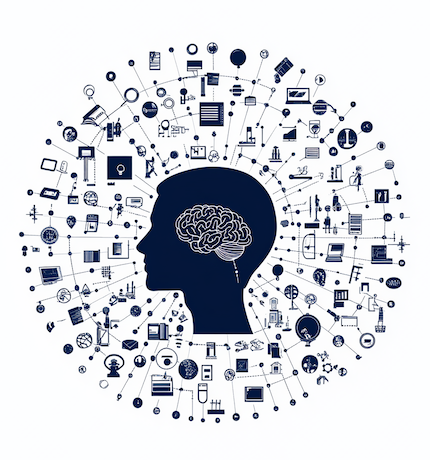
Any sufficiently advanced technology is indistinguishable from magic. — Arthur C. Clarke
What are AI agents? Simon Willison crowdsourced a lot of definitions that focus on:
1) Using AI to take action on the user’s behalf in the real world (i.e. what the agent does)
2) Using AI to control a loop or complex flow (i.e. how the agent does it).An AI agent takes a sequence of actions based on an AI-determined control flow.
Agents use prompts as the CPU of a Turing machine that can manage state, memory, I/O, and control flow. The agent can access the Internet and tools to perform compute tasks, retrieve info, take actions via APIs, and use the outputs to determine next steps in a loop or complex control flow. Maybe even control a browser or computer.
In this post, we’ll try to develop a roadmap of agent concepts and patterns to learn, and resources to learn them.
-
The AI Economic Singularity is Near

Economics is the painful elaboration of the obvious.
Politicians sometimes say things like “AI is going to make our workers more productive, and they will reap the rewards with higher wages.”
It’s mostly worked out the way in the past. But the labor share of income has varied. How much labor benefits, and how much capital benefits, depends on how technology complements labor, versus substitutes for it. There is little support in economic theory for the notion that technological progress always raises everyone’s wages and standard of living. It’s a pop economics, Panglossian belief based on motivated thinking.
AI is the most human-like technology ever invented, so it seems likely to be an effective substitute for human labor. It seems likely that we will get growth but also disruption, more income inequality, more concentration of wealth, and more people locked out of decent middle class and working class jobs. The worst case would be an ‘economic singularity’ of robots making more robots while masses are immiserated. We should think about how to detect the singularity and use policy to head it off.
Let’s break it down (painful as it may be).
-
The State of AI in 2025
Simon Willison has a great post on everything we learned about AI in 2024 (somewhat technical). Inspired by him, here is a roundup of the top events of 2024 in AI and where we are now.

-
There Are Levels To This Game: The 5 Stages of AI Adoption

Expanding Brain Meme of the 5 Levels of AI Adoption. -
AI Disasters and How to Avoid Them, and Use Tools Like ChatGPT Effectively Without Risking Your Reputation and Career

"I would have been the greatest artist ever,
if I could just remember how many fingers humans have." -
How To Build a Financial Market Data Chatbot with OpenBB and LangChain: A Step-by-Step Guide (Including Video and Code)
A video and blog post about building a chat agent for conversational queries to an API like OpenBB.
- OpenBB is a platform offering a unified API to access market data services.
- LangChain is a framework that supports many LLM application patterns, including chatbot agents.
- Streamlit is a simple way to build a Python chat UI.
- We build a functional chatbot capable of answering stock market-related queries using tools.
-
Summarize a complete book using the giant context window in Gemini 1.5
A short (< 10-minute) demo video, with a couple of intro comments about early 2024 LLM developments
-
Generative AI in 2024
A slide presentation for a discussion with HBS Next Chapter.
-
Practical ChatGPT Prompting: 15 Patterns to Improve Your Prompts
A logician is hiking through snowy woods and sees a small spaceship, and next to it, two tiny legs, sticking out of a snow drift. He digs the little creature out, and it turns out to be small omniscient space alien. The alien is extremely grateful and, being omniscient, offers to answer any question the logician may have. Naturally the logician asks: “What is the best question to ask and what is the correct answer to that question?” The tiny alien pauses momentarily, and replies, “The best question is the one you just asked; and the correct answer is this one.” And just like that…the alien hops in their spaceship and flies away.

Image via Dall-E: An image in the style of an arty Japanese animated film with vibrant colors, side view of a young lady sitting at a desk in front of a laptop in a library, looking dreamy and inquisitive. On her laptop screen, a futuristic robot is depicted sitting at a sleek desk facing the young lady. -
OpenAI DevDay
OpenAI is moving fast and extending their lead.
-
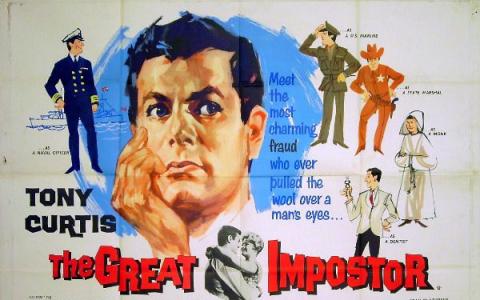
Truth, Lies, and ChatGPT
There are three kinds of lies: lies, damned lies, and statistics. - Mark Twain
-
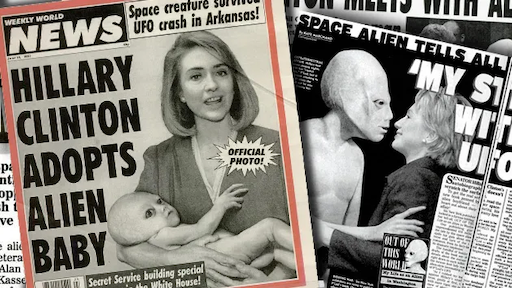
Bullshit
That was just bullshit, Joel. - Miles, in Risky Business (1983)
History is a set of lies agreed upon. - Napoleon Bonaparte
Bullshit is the glue that binds us as a nation. - George Carlin
-
ChatGPT, OpenAI, and the Generative AI Revolution
I think it’s comparable in scale with the Industrial Revolution or electricity — or maybe the wheel. - Geoffrey Hinton
Any sufficiently advanced technology is indistinguishable from magic. - Arthur C. Clarke
GPT is a transformer so smart / That can write like a human or a bard / It can answer your queries / Or make stories so eerie / That you’ll wonder if it has a heart - GPT
-
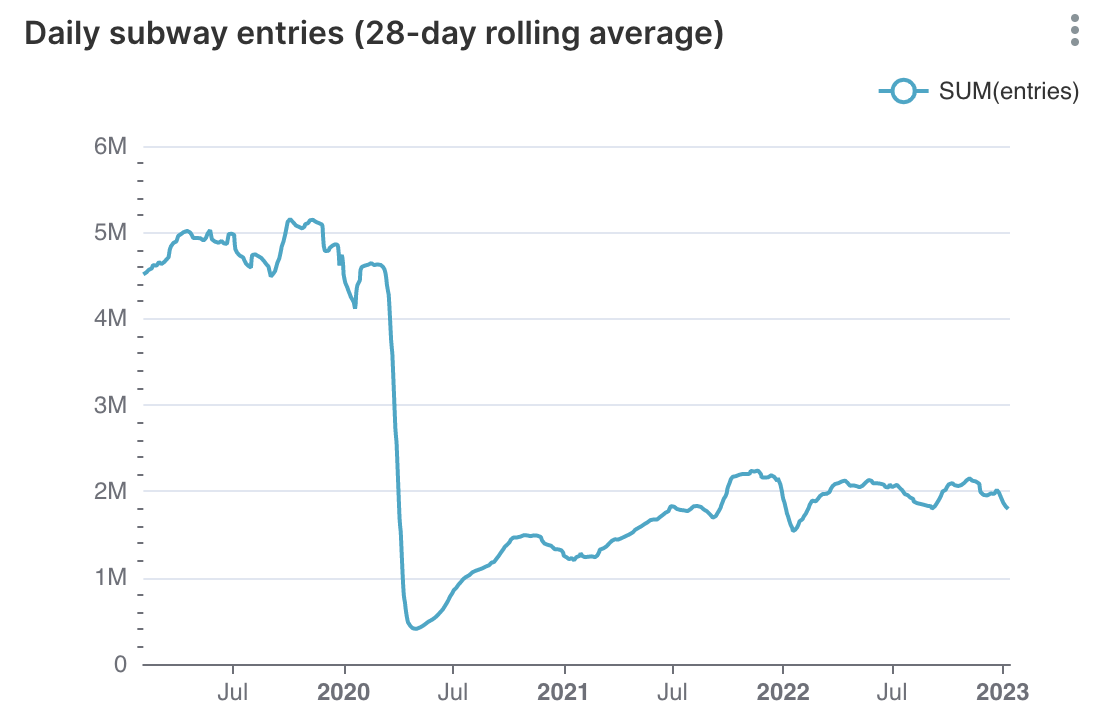
NYC Subways and the Terrible, Horrible, No Good, Very Bad, Turnstile Data
The future ain’t what it used to be. - Yogi Berra
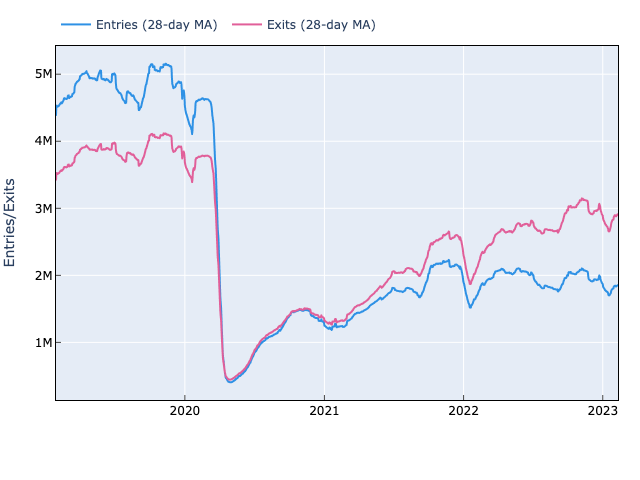
-
Numbers With Wings: A Modern Data Stack-In-A-Box
Not everything that counts can be counted, and not everything that can be counted counts. - Albert Einstein
There are three kinds of people: those who can count, and those who can’t. - Source unknown